
Key Points
- Active Self-Construction: Research suggests that viewing mental health through metaphors like building a car—where drives act as the "engine" and agency as the "steering wheel"—encourages proactive self-improvement rather than reactive fixes, promoting long-term well-being.
- Pillars of Mental Health: Evidence leans toward agency (the ability to influence change) and gratitude (appreciating life's complexities) as foundational for resilience, shifting focus from constant happiness to empowered, balanced living.
- Generative Drive as Leader: The generative drive, which fuels creation, learning, and love, seems likely to foster inner peace when it oversees aggressive and pleasure drives, preventing imbalance and supporting fulfillment.
- Dual Role of Defenses: Defense mechanisms like projection, displacement, and avoidance protect the psyche but can subtly undermine relationships and self-growth if not managed, highlighting the need for self-awareness.
Shifting from Repair to Engineering
The "Building the Self Like a Car" framework encourages a proactive approach to mental health. Instead of passively addressing issues as they arise (like a repairman), individuals act as engineers, designing and optimizing their inner workings. This involves understanding the "engine" (internal drives) and "steering wheel" (control mechanisms like agency), leading to greater autonomy. For tools, practices such as self-inquiry and journaling can help, as outlined in resources like the Huberman Lab series (https://www.hubermanlab.com/episode/guest-series-dr-paul-conti-how-to-improve-your-mental-health).
Agency and Gratitude as Foundations
True psychological well-being emphasizes agency—the capacity to effect change—and gratitude—a humble recognition of the world's intricacies. These elements provide stability, much like twin pillars supporting a structure. To cultivate them, start with simple protocols: daily reflections on personal influence and moments of appreciation. This approach avoids the pitfalls of chasing perpetual joy and fosters resilience in facing life's challenges.
The Power of Generative Drive
At the core is the generative drive, the innate force behind creativity, learning, and connection. When it functions as the "CEO," it harmonizes aggressive drives (energy for action) and pleasure drives (seeking enjoyment), leading to contentment. Imbalances occur when aggression or pleasure dominate, but redirecting them through generative pursuits—like creative projects or helping others—can restore balance. Recent discussions on platforms like X highlight its role in motivation, especially in AI-driven futures (see post examples at https://x.com).
Navigating Defense Mechanisms
Subconscious defenses such as projection (attributing your feelings to others), displacement (redirecting emotions), and avoidance (evading issues) serve as "protectors" but often disrupt relationships by creating misunderstandings or conflicts. Awareness through therapy or self-examination allows for healthier alternatives, like sublimation (channeling impulses constructively). Recognizing these patterns early can prevent relational sabotage.
The framework of "Building the Self Like a Car" draws from psychiatric insights, particularly those shared by Dr. Paul Conti in his discussions on mental health. This metaphor positions individuals as active engineers of their psyche, rather than mere fixers of breakdowns. The "engine" represents the internal drives propelling thoughts and actions, while the "steering wheel" symbolizes the control and direction provided by agency. This approach shifts the paradigm from reactive maintenance to intentional design, empowering people to optimize their mental machinery for smoother navigation through life's complexities.
Central to this model are the twin pillars of agency and gratitude. Agency refers to the empowered ability to influence one's environment and choices, fostering a sense of control without illusionary dominance. Gratitude, meanwhile, involves a humble acknowledgment of the world's nuances, countering entitlement or despair. Together, they form the bedrock of robust mental health, as opposed to the fleeting pursuit of happiness. For instance, in daily practice, agency might manifest in setting boundaries at work, while gratitude could involve reflecting on supportive relationships. These elements are not innate for everyone; they require cultivation through consistent self-reflection, such as mirror exercises or journaling, to build resilience against stressors.
Delving deeper, the generative drive emerges as the fundamental force driving human progress in creation, learning, and love. Described as an innate "fuel" for growth and contribution, it must assume a leadership role—akin to a CEO—over the aggressive and pleasure drives to achieve equilibrium. The aggressive drive encompasses not just hostility but also proactive engagement and competition; when unchecked, it can lead to isolation or conflict. The pleasure drive, focused on enjoyment and reward, might result in short-term indulgences like excessive scrolling if dominant. However, when the generative drive reigns, it channels these into constructive outlets, yielding peace, contentment, and delight. Recent online conversations, including those on X from 2024-2025, emphasize its relevance in modern contexts, such as motivating creativity in an AI-augmented world where basic needs are met, allowing pursuit of one's "born purpose."
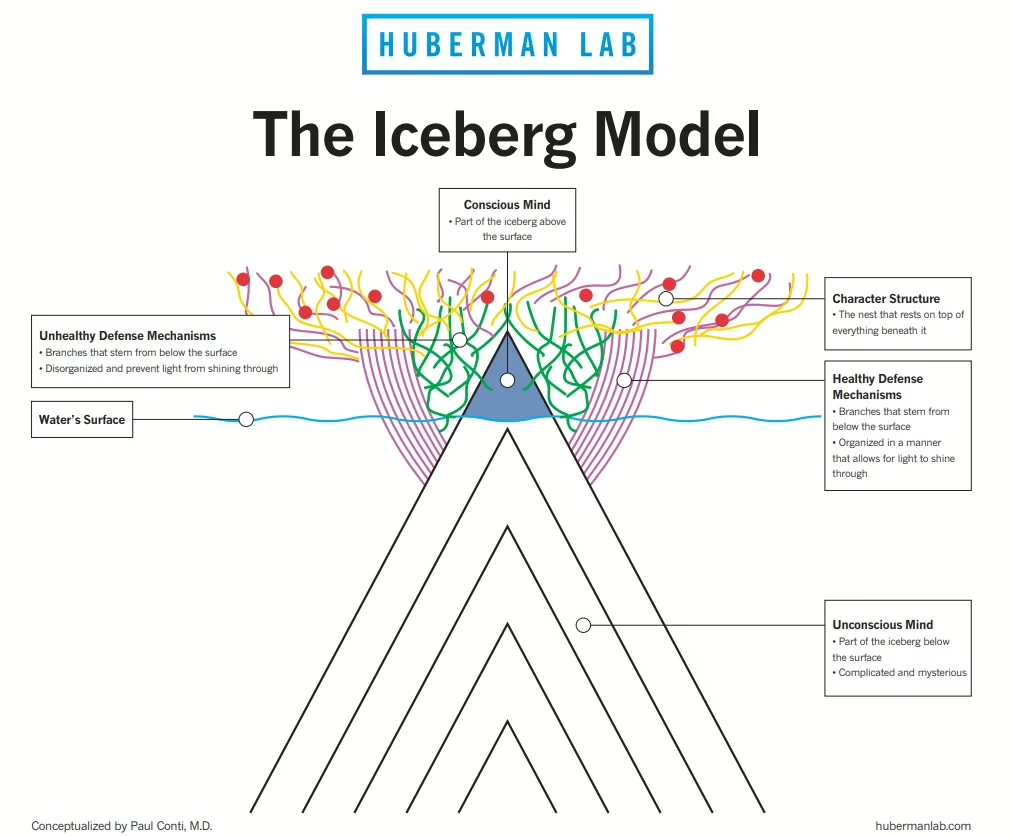
Defense mechanisms operate as subconscious "guardians," shielding the self from threats but often at a cost to interpersonal dynamics and personal growth. Projection involves externalizing internal conflicts onto others, such as accusing a partner of selfishness when feeling insecure oneself. Displacement redirects impulses to safer targets, like snapping at a colleague after a family argument. Avoidance sidesteps discomfort altogether, potentially stunting emotional development. These mechanisms, while protective, can erode trust and authenticity in relationships, creating cycles of misunderstanding or resentment. Other defenses include acting out (impulsive behaviors) and sublimation (positive redirection, e.g., turning anger into art). Managing them requires exploring the "iceberg model" of the mind, where the visible conscious layer rests atop a vast unconscious base influencing behavior. Tools like therapy, meditation, and self-inquiry help uncover and reframe these patterns, transforming potential saboteurs into allies for growth.
To illustrate the interplay of drives, consider the following table:
| Drive Type | Description | Positive Expression | Potential Imbalance | Role in Framework |
|---|---|---|---|---|
| Generative | Innate push toward creation, learning, and contribution | Building meaningful projects, fostering relationships | Suppressed by overwork or trauma, leading to stagnation | Acts as "CEO" for balance and contentment |
| Aggressive | Energy for action, competition, and agency | Motivated goal pursuit, healthy assertiveness | Overactive: Hostility or isolation; Underactive: Demoralization | Must be directed by generative drive |
| Pleasure | Seeking enjoyment and reward | Balanced leisure, joy in achievements | Overactive: Addiction or envy; Underactive: Anhedonia | Supports well-being when subordinated |
Another table outlines common defense mechanisms and their impacts:
| Mechanism | Definition | Protective Role | Sabotaging Effect | Management Strategy |
|---|---|---|---|---|
| Projection | Attributing own feelings to others | Shields ego from uncomfortable truths | Strains relationships via false accusations | Self-reflection to own emotions |
| Displacement | Redirecting impulses to safer outlets | Diffuses immediate tension | Harms innocent parties, builds resentment | Identify triggers through journaling |
| Avoidance | Evading confronting issues | Prevents overwhelm | Delays growth, perpetuates problems | Gradual exposure via therapy |
| Acting Out | Expressing impulses behaviorally | Releases pent-up energy | Leads to regrettable actions | Channel into constructive activities |
| Sublimation | Redirecting to socially acceptable forms | Turns negative into positive | None if balanced; over-reliance limits direct processing | Encourage creative outlets |
This framework aligns with broader psychiatric principles, emphasizing self-awareness as key to integration. For example, the iceberg model—where unconscious elements like unprocessed trauma act as hidden "short-circuits"—underscores the need for deep exploration. Protocols include mapping the "cupboards" of the self (aspects like behaviors and strivings), grounding meditations to manage panic, and fostering a "generosity of spirit" in relationships for mutual strengthening. In controversial or debated areas, such as the balance between drives in high-stress environments, counterarguments suggest environmental factors (e.g., societal pressures) may override individual efforts, yet primary sources prioritize internal agency. Overall, this model offers a comprehensive blueprint for mental engineering, adaptable to diverse life stages and supported by ongoing discussions in psychology communities.
Key Citations
- Ask Huberman Lab: What is generative drive?
- Huberman Lab: Guest Series | Dr. Paul Conti: How to Understand & Assess Your Mental Health
- Huberman Lab: Guest Series | Dr. Paul Conti: How to Improve Your Mental Health
- Huberman Lab: Guest Series | Dr. Paul Conti: How to Build and Maintain Healthy Relationships
- Huberman Lab: Guest Series | Dr. Paul Conti: Tools and Protocols for Mental Health